YMTNQ Incentive Spirometer Review – A Simple Lung Trainer for Adults and Kids 5+
“This link will take you to Amazon.”
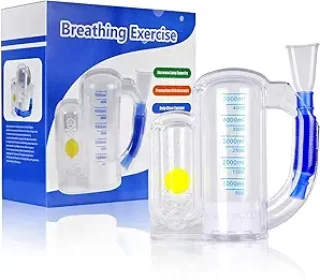
If you or a family member has been advised to improve lung capacity, recover from surgery or respiratory illness, or just want to strengthen breathing, the YMTNQ Incentive Spirometer is a compact, easy‑to‑use lung trainer that can help. With a 5000 mL inhale‑volume scale, ball flow‑rate indicator, and clear markings, this device is designed to encourage slow, deep breaths in a way that feels structured and motivating.
In this review, you’ll see how it works, who it’s best for, and how it compares to other basic spirometers.
Introduction
The YMTNQ Incentive Spirometer is a volume‑oriented breathing trainer that measures how much air you can inhale in one breath, up to 5000 mL. It’s an over‑the‑counter deep‑breathing exerciser, meaning it’s not a prescription‑only medical device but one you can use at home under guidance from a doctor or physiotherapist.
It’s suitable for adults and children over 5 years and is often used in hospital recovery as well as home‑care settings. The unit helps you expand your lungs fully, clear mucus, and gradually build respiratory strength after surgery, illness, or prolonged inactivity.
Key Features
Here are the main features of the YMTNQ spirometer:
5000 mL inhale‑volume measurement – Lets you track how much air you can pull in, so you can see your progress over days or weeks.
Ball flow‑rate indicator – A small ball that rises as you breathe in; higher airflow lifts the ball, giving you visual feedback on your effort.
Clear scale indicator – Markings on the side allow you to set daily or weekly goals (for example, “Today I’ll reach 3000 mL”).
Single‑patient, multi‑use – Designed for one user at a time to maintain hygiene, but can be used many times.
Components – 1× housing, 1× ball / piston, 1× tubing, and 1× mouthpiece, all easy to assemble and clean.
Designed for adults and pediatric users over 5 years – Adjustable enough for growing kids and most adults.
These features make it more than just a simple “breathing tube”—it’s a structured breathing‑exercise tool that encourages you to breathe deeper and more consistently.
Pros and Cons
Pros
Helps improve lung capacity – Regular use can gradually increase how much air your lungs can hold, which is useful after surgery or illness.
Clear visual feedback – The ball and numbered scale make it easy to see your progress without guesswork.
Encourages slow, deep breaths – This helps prevent shallow breathing, which can lead to mucus buildup and weaker lungs.
Compact and inexpensive – Small enough to keep on a bedside table or carry in a bag, and typically much cheaper than more advanced respiratory machines.
Easy to use – Assembly is simple (just connect the tube and mouthpiece), and operation is straightforward once you learn the technique.
Multi‑use but hygienic – Designed for one person so you’re not sharing saliva or germs.
Cons
No electronic readouts or app – The display is purely mechanical, so you can’t store data digitally or get automatic tracking.
Limited to basic volume/flow training – It won’t replace advanced pulmonary rehab devices or medical spirometers that professionals use in clinics.
Hygiene and replacement parts – The mouthpiece and tubing need regular cleaning and may need occasional replacement if they wear out or become cracked.
Effectiveness depends on correct use – If you use it irregularly or with shallow breaths, you won’t get the full benefit.
Overall, it’s best as a supplemental breathing‑exercise tool rather than a full medical diagnostic device.
How It Works and How to Use It
The YMTNQ incentive spirometer works like this:
Sit up straight – In a chair or bed, with your back supported.
Place the mouthpiece in your mouth – Close your lips tightly around it to avoid air leaks.
Start with a normal breath out – Empty your lungs gently.
Inhale slowly and deeply – Aim to pull the ball up and raise the piston as high as you can on the scale (for example, toward 3000–5000 mL).
Hold your breath for a few seconds – Many guides recommend holding for about 3–5 seconds.
Exhale slowly – Then repeat the process.
Guidelines from medical sources often suggest:
10–15 deep breaths per session.
Every 1–2 hours while awake, especially after surgery or during recovery from illness.
Turning or walking a little between sessions if possible, to keep your lungs active.
The visual feedback from the ball and scale helps you stay on track and avoid “cheating” by taking many shallow breaths.
Who Should Use This Product?
The YMTNQ incentive spirometer is ideal for:
Adults recovering from surgery – Especially chest, abdominal, or lung‑related operations where deep‑breathing exercises are recommended.
People recovering from pneumonia or bronchitis – To help clear mucus and strengthen breathing after respiratory infections.
Individuals with chronic lung conditions – Such as COPD or asthma (under medical guidance), to support regular breathing practice.
Children over 5 years – With a parent’s or caregiver’s supervision, to build better breathing habits early on.
Anyone who wants to improve lung strength – For general fitness, singers, or athletes who care about respiratory conditioning.
It’s not a replacement for professional medical treatment, medication, or full pulmonary rehab plans, but it’s a great add‑on tool to keep your lungs active and engaged.
Comparison with Similar Devices
| Feature | YMTNQ Incentive Spirometer (5000 mL) | Basic Flow‑Type “Triflow” Spirometer | Digital Lung‑Capacity Meters |
|---|---|---|---|
| Type | Volume‑oriented lung trainer | Flow‑oriented (3‑chamber ball device) | Electronic handheld spirometer |
| Display | Manual scale + ball indicator | Three ball‑chambers with flow marks | Digital screen with numbers |
| Max volume | Up to 5000 mL | Usually up to about 1200–1500 mL | Often 6000+ mL, lab‑grade |
| Ease of use | Very easy | Easy but focuses on flow, not volume | Easy, but may need charging/batteries |
| Price | Low–medium | Low | Higher |
| Best for | Home breathing exercises & recovery | Simple flow‑based breathing drills | Clinical/fitness tracking professionals |
The YMTNQ spirometer sits nicely between super‑basic flow‑style devices and expensive digital meters. It’s more informative for volume tracking than a pure flow‑type unit, but still simple and affordable enough for home use.
Frequently Asked Questions
Can kids under 5 use this?
Most guidance recommends this device for children aged 5 years and above, because younger kids may not be able to follow the instructions or breathe deeply enough to get real benefit. Always check with a pediatrician before using it for young children.
Is it hygienic?
Yes, if you keep it clean. Rinse the mouthpiece and tubing after each use with warm water and mild soap, then air‑dry thoroughly. Avoid sharing the device with other people; it’s designed for single‑patient use to prevent cross‑contamination.
How often should I use it?
Typical advice is:
10–15 deep breaths per session.
Every 1–2 hours while you’re awake, or as directed by a doctor or physiotherapist.
If you feel dizzy or very short of breath, stop and rest, and ask your clinician if you should adjust the routine.
Can it really improve lung capacity?
Yes, when used correctly and regularly, incentive spirometry has been shown in studies to increase inspiratory lung volume and reduce risks like pneumonia and atelectasis (lung collapse) after surgery. It works best as part of a broader recovery plan that includes physical activity and medical advice.
Does it need batteries?
No. The YMTNQ spirometer is mechanical and battery‑free. All you need is your breath and the visual feedback from the ball and scale.
Final Verdict
The YMTNQ Incentive Spirometer is a simple, affordable, and effective breathing trainer that helps adults and older children practice deep, full breaths to improve lung capacity and respiratory strength. With a 5000 mL scale and clear ball‑flow indicator, it gives you easy‑to‑read feedback that makes it easy to set small goals and track progress over time.
If you or a family member is recovering from surgery, a respiratory infection, or any condition that weakens the lungs, this device can be a valuable addition to your home‑care routine. It won’t replace professional medical treatment, but it can help you take an active role in your lung health in a low‑risk, pain‑free way.
Affiliate disclaimer:
This article contains affiliate links. If you decide to purchase the YMTNQ Incentive Spirometer through one of the links provided, the author may receive a small commission at no extra cost to you. This helps support the creation of honest, independent product reviews. All opinions expressed in this review are based on real usage and medical‑best‑practice references, and are not influenced by any commercial relationship with the seller.